
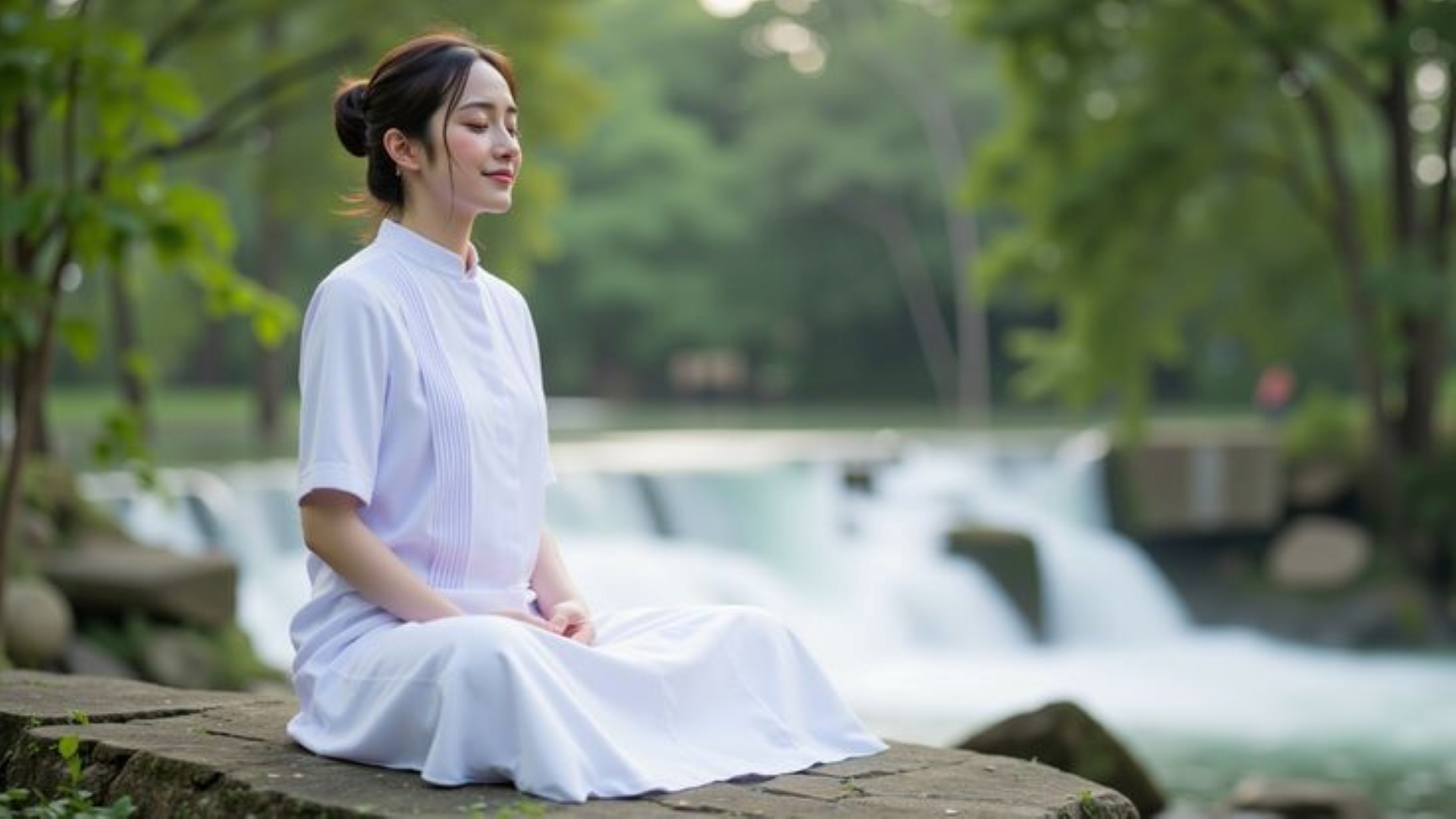
“Silence becomes your greatest teacher. When you learn to rest in awareness, peace blooms naturally.”
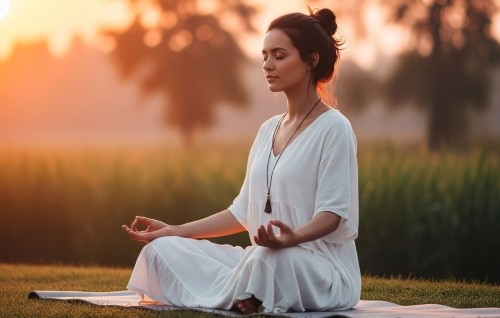
“In every step, awareness awakens.”
Guided by meditation monks and trained therapists, you’ll practice mindful walking the bridge
between activity and stillness.
Feel each foot touch the earth. Observe your breath move with your steps.
This ancient technique awakens grounding, balance, and peace.
“When the body becomes still, the mind becomes spacious.”
Learn the art of Anapanasati mindfulness of breathing as taught in the Satipatthana Sutta and Anapanasati Sutta.
Through calm observation of the breath, the mind becomes clear, the heart softens, and inner light begins to shine.
“When the Nadis are clear, the mind shines.”
Experience a unique Ayurvedic therapy that assists meditation by releasing tension and clearing blocked energy from the back, shoulders, and neck.
This mindful touch combines breath, herbal oils, and ancient marma techniques to purify the 72,000 energy channels (Nadis), allowing prana to flow freely.
Dr. Richard Davidson demonstrated that mindfulness can reshape the brain even after years of habitual patterns.
Just 20 minutes of daily mindfulness can cause measurable structural brain changes.
Humans spend 46.9% of their lives with a wandering mind lost in past or future thoughts. Mindfulness brings us home to the present, where true wisdom grows.
In a 3-month mindfulness experiment:
Yogis practicing Sakman (walking) and Paryanka (sitting) meditations show enhanced mental clarity and stability.
In a normal waking person, the brain operates mostly in the Beta range — producing around 100 thoughts per second, constantly processing sensory input and external distractions.
During Sakman (walking) and Paryanka (sitting) meditation, as awareness deepens and the breath slows, brain activity naturally shifts:
Beta → Alpha → Theta → Delta
In the rhythm of each mindful step lies the quiet preparation for inner peace. Walking
Meditation is a moving form of mindfulness a gentle bridge between activity and stillness,
helping the wandering mind return home before seated practice begins.
At Ayu Ceylon, this meditative walk is guided in tranquil natural surroundings, often
practiced after meals or after rest, allowing both body and mind to harmonize before
deeper meditation sessions.
Begin by standing tall and balanced. Feel the soles of your feet grounding into the earth.
Before taking your first step, pause sense your breath, your stillness, and the living
connection with the ground beneath you.
External sensations like sounds, sights, or movements may arise. Instead of resisting them,
let them pass through your awareness. Maintain your Sati (mindfulness), steady and
unshaken, amidst the flow of life. This practice trains your ability to stay mindful in all
moments, not only in meditation halls.
Keep your gaze softly lowered about one meter ahead.
Do not look directly at your feet or stare outward.
This gentle focus quiets the mind and prevents sensory distractions, creating a calm inner
rhythm.
Thoughts, sounds, or emotions may arise as they naturally do.
When this happens, simply note it with awareness and return gently to the next step.
With practice, the act of walking becomes seamless every movement infused with
presence, every step a living meditation.
Walking meditation activates the body’s natural pranic flow, balancing the nervous system and grounding restless thoughts. It stimulates blood circulation, awakens digestive fire (Agni) after meals, and prepares the mind for deeper meditative absorption.
Each step harmonizes body, breath, and awareness awakening a quiet joy that flows naturally from being fully present.
“When your feet kiss the Earth with awareness, every step becomes a prayer.”At Ayu Ceylon, this sacred practice is taught as part of our Meditation Petal The Happiest State of the World, inviting you to experience how movement itself can lead to stillness, balance, and bliss.
Anapanasati the mindfulness of breathing is one of the most profound meditation
practices taught by the Buddha.
It is the path of Samatha (calmness) and Vipassana (insight), leading to clarity, peace, and
liberation.
At Ayu Ceylon, our guided Anapanasati sessions draw inspiration from the
Satipatthana Sutta, Anapanasati Sutta, and Girimananda Sutta. Through gentle awareness
of the natural breath, your mind becomes calm, clear, and deeply present revealing the
luminous stillness within.
Meditation begins with the environment. Choose a quiet, softly lit space where you can sit comfortably without distraction.
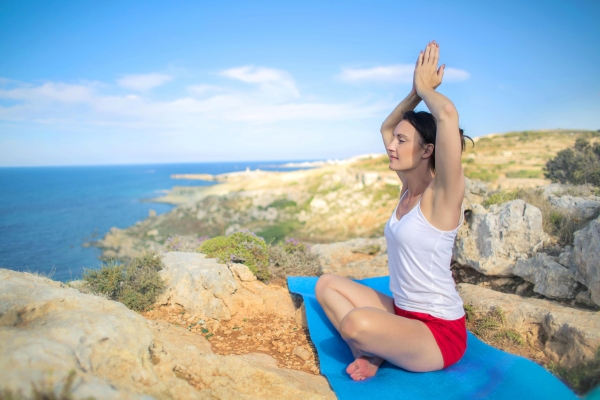
Sit on the floor in Padmasana (Lotus Pose), or use Virasana, Sukhasana, or a chair whichever allows your spine to remain upright and relaxed.
Keep your body balanced, shoulders soft, and eyes gently closed.
As the breath steadies, the 72,000 nadis subtle energy channels begin to open and harmonize
This alignment of pranic flow supports mental focus, emotional balance, and physical stillness.
Do not control your breathing. Simply observe.
Notice the coolness of the in-breath and the warmth of the out-breath.
Feel the soft touch of air at the nostrils, chest, throat, or belly.
As awareness deepens, distractions fade. The breath becomes soft, silent, and luminous a gateway to the present moment.
When thoughts or sensations arise, gently acknowledge them:
“Thinking… thinking.”
“Sound… sound.”
“Pain… pain.”
Then return to the breath.
This natural rhythm strengthens Sati (mindfulness) and Samadhi (concentration) the two wings that carry you into stillness.
With regular practice, the mind merges effortlessly with the breath. Moments of stillness deepen into insight where the boundaries between self and breath dissolve.
At Ayu Ceylon, we encourage practitioners to share their meditation experiences with a Karmasthana Acharya (qualified teacher). Personalized guidance helps purify the meditation process and overcome obstacles such as restlessness, pain, or drowsiness transforming them into gateways of awareness.
During deep Paryanka (sitting) meditation, you may notice sensations of warmth, tightness, or
gentle discomfort especially around the neck, shoulders, or joints. These are not random aches;
they are signs of energy movement and release.
According to Ayurveda and yogic science, the human body is interwoven with 72,000 Nadis
subtle channels that carry Prana, the life force. Over time, emotional stress, suppressed memories,
and negative thought patterns can block these channels, creating stagnation in both body and mind.
Modern science echoes this wisdom: every thought emits energy in the form of minute photon
particles tiny packets of light. When thoughts are filled with fear, anger, or grief, these photons
condense into dense, stagnant vibrations traditionally known in Ayurveda as “black energy.”
During meditation, as your awareness deepens and stillness expands, the body naturally begins to
purify itself.
The sensations you feel are the signs of this cleansing the release of trapped photon energy
through the Nadis.
This process clears the energetic pathways, restoring harmony, balance, and lightness throughout
your system.
When the Nadis are clear, the mind becomes luminous.
When the mind is light, silence transforms into bliss.
As the breath steadies, the 72,000 nadis subtle energy channels begin to open and harmonize
This alignment of pranic flow supports mental focus, emotional balance, and physical stillness.
To support this powerful inner transformation, AyuCare Ceylon offers a specialized Black Energy Release Technique, designed to assist in the removal of subtle energetic blockages.
At Ayu Ceylon, meditation and Ayurveda unite harmonizing body, breath, and
consciousness.
Through gentle awareness, guided techniques, and therapeutic touch, you are supported in your
journey from black energy to pure awareness, from tension to tranquility, from heaviness to
freedom.
“When energy flows freely, peace arises naturally.”
Practiced together, walking and breath meditation awaken both dimensions of mindfulness:
Begin your journey to wellness with Ayu Ceylon. Discover healing through personalized Sri Lankan Ayurveda treatments from detox and relaxation to complete rejuvenation. Let us guide your rhythm.
Real voices, real stories. Hear how AyuCare Ceylon has transformed lives through authentic care, healing, and personalized Ayurvedic wellness experiences that leave a lasting impact.

Switzerland
At first, I was doubtful. I didn’t think a week could bring much change. But after 7 days at Ayu Ceylon, my mind is noticeably calmer, my sleep deeper, and my digestion—something I’ve struggled with for years—is now better than ever. I feel real transformation.

United Kingdom
The sense of calm and grounding I felt after the traditional oil therapies was profound. What surprised me most is how that peace stayed with me for months, even in the midst of daily stress. It was more than a treatment it was a reset

Japan
This isn’t just Ayurveda; it’s healing that comes from the heart. Every person at AyuCare Ceylon genuinely cares, and that love and warmth infuses every part of the experience. I’ve never felt more seen, held, and healed.

Italy


I arrived utterly drained, both mentally and physically—but I left with a glow I hadn't felt in years. Every massage wasn't just a treatment, it was a sacred ritual that touched my soul and soothed every inch of my body.